Nadège Labrecque
Keberica Lusitano Farm Canada

Keberica Lusitano Farm Canada
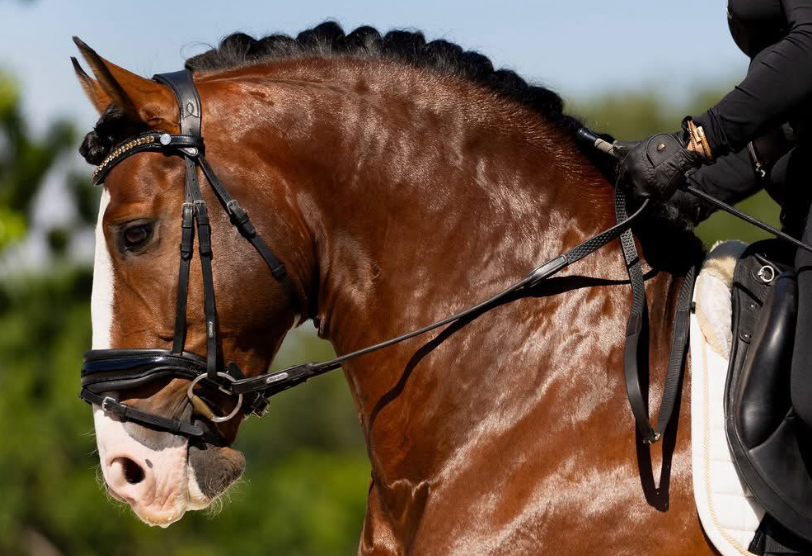
Nadège Labrecque and her husband run Keberica Lusitano Farm in Quebec City, Canada, where they have been breeding Lusitano horses since 2010. What started as a passion for the breed has grown into a dedicated breeding program with horses imported from Europe.
“We have been raising Lusitano horses since 2010,” Nadège explains. “This year will be our fifteenth foal.” The journey toward Lusitanos began after years of riding warmblood horses. “I used to ride warmblood horses,” she says. “But as an amateur and a small rider they were sometimes difficult for me.” Everything changed the day she encountered a Lusitano stallion. “One day we went to see a Lusitano stallion and we immediately fell in love with the breed,” Nadège recalls. “The temperament is amazing.”
For Nadège, the temperament of the Lusitano is one of the breed’s most important qualities. “They are horses that suit both amateur riders and professional riders,” she explains. Together with her husband, what started with a single horse slowly developed into a breeding program. “At first we bought a stallion simply because we loved the breed,” she says. “Then we added a mare and slowly the breeding program started to grow.”
Today Keberica Farm has around fifteen Lusitano horses. Breeding Lusitanos in Canada brings its own challenges, especially because of the climate and the complexity of importing horses. “You need to be a little crazy to raise Lusitano horses in Canada,” Nadège laughs.The first horses were imported from France and Belgium before later imports came directly from Portugal. “Importing horses into Canada is not easy, but we kept building our program step by step,” she explains.
Despite the growth of their breeding program, the farm remains a passion project. “We both work full time outside the farm, so the farm is really a hobby for us,” she says. Still, Nadège and her husband travel regularly to Portugal to stay connected with the origin of the breed. “We try to come to Portugal every year,” she explains. “It’s important for us as breeders to see where the breed comes from and what other breeders are doing.”
It was during one of these journeys that Nadège first became closely connected to the Figueiras bloodlines.“We had been following Dragão das Figueiras for quite some time,” she explains. In 2018 the couple decided they wanted to add a Figueiras horse to their program. They travelled to Belgium where they discovered a young mare that immediately caught their attention. “We saw many horses, but we always came back to the same mare,” Nadège remembers. “She captured our hearts.” The mare, Marquesa, was imported to Canada when she was only two years old. Shortly after purchasing her, the mare already proved her quality in the show ring. “After having won a gold medal at 1 year old we brought her to the Belgian Championship and she won a silver medal,” Nadège says.
The experience convinced the couple to look for another Figueiras horse. They eventually imported a young colt named Prodigio MVL, a son of Dragão das Figueiras. The decision was made after seeing only a photograph of the newborn colt. “I saw the photo when he was only 24 hours old and I immediately fell in love with him,” Nadège says. Prodigio MVL was later imported to Canada and has since developed into one of the centerpieces of their breeding program.
Today the stallion is in training with the international rider Béatrice Boucher in Florida with the goal of reaching Grand Prix level in the future. For Nadège, the qualities that impressed her most about the Figueiras horses remain their character and rideability. “The temperament is exceptional,” she says.
The stallion lives outside both at home and at the training facility, always maintaining the calm and gentleman-like attitude that first convinced her to invest in the line. Nadège also closely follows other stallions from the Figueiras program. “Oscar das Figueiras is an amazing horse,” she says. Even though she already owns a son of Dragão, she would still like to use Oscar in the future. “Oscar brings something different through his dam line,” she explains.
While the Figueiras bloodlines are not yet widely known in Canada, Nadège hopes that will change. «Our goal is to develop more Dragão bloodlines in our breeding program,” she says. As their stallion begins competing and producing offspring, she believes more Canadian riders and breeders will discover the qualities of the Figueiras horses.
For Nadège Labrecque, the story of Keberica Farm is ultimately about passion for the Lusitano horse and the people who dedicate their lives to breeding it.
Nous vous contacterons personnellement.


 Paulo Caetano
